
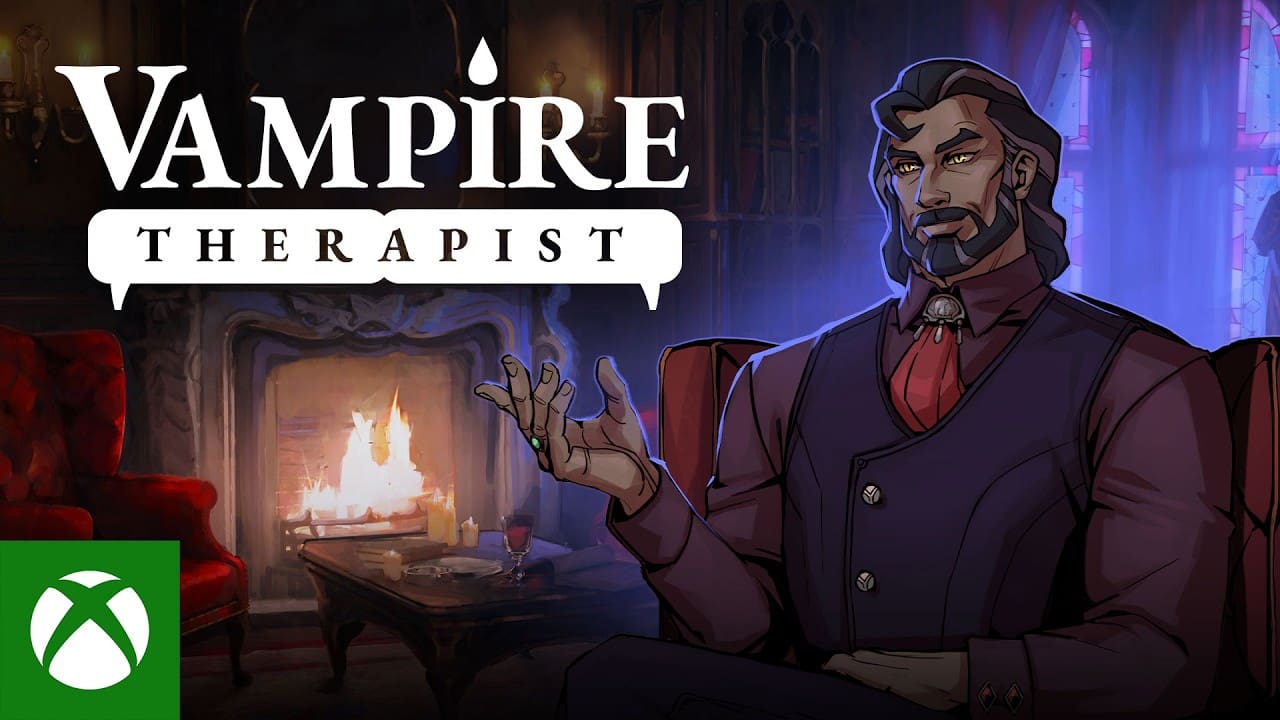
Developed by Little Bat Games, Vampire Therapist is one of those ideas that sounds like a joke until you actually sit down with it. A therapy simulator… for vampires. It’s a strange pitch, but one that somehow works far better than it has any right to. Recently landing on Xbox, this BAFTA-nominated title brings something genuinely different to the table – even in a space already packed with quirky indie concepts.
Right from the start, it’s clear this isn’t your typical game. You step into the shoes of a former Wild West outlaw turned vampire therapist, helping other undead work through centuries of emotional baggage. It leans heavily into narrative, and while that might put some people off, it’s actually where the game shines most.
Talking it Out With The Undead
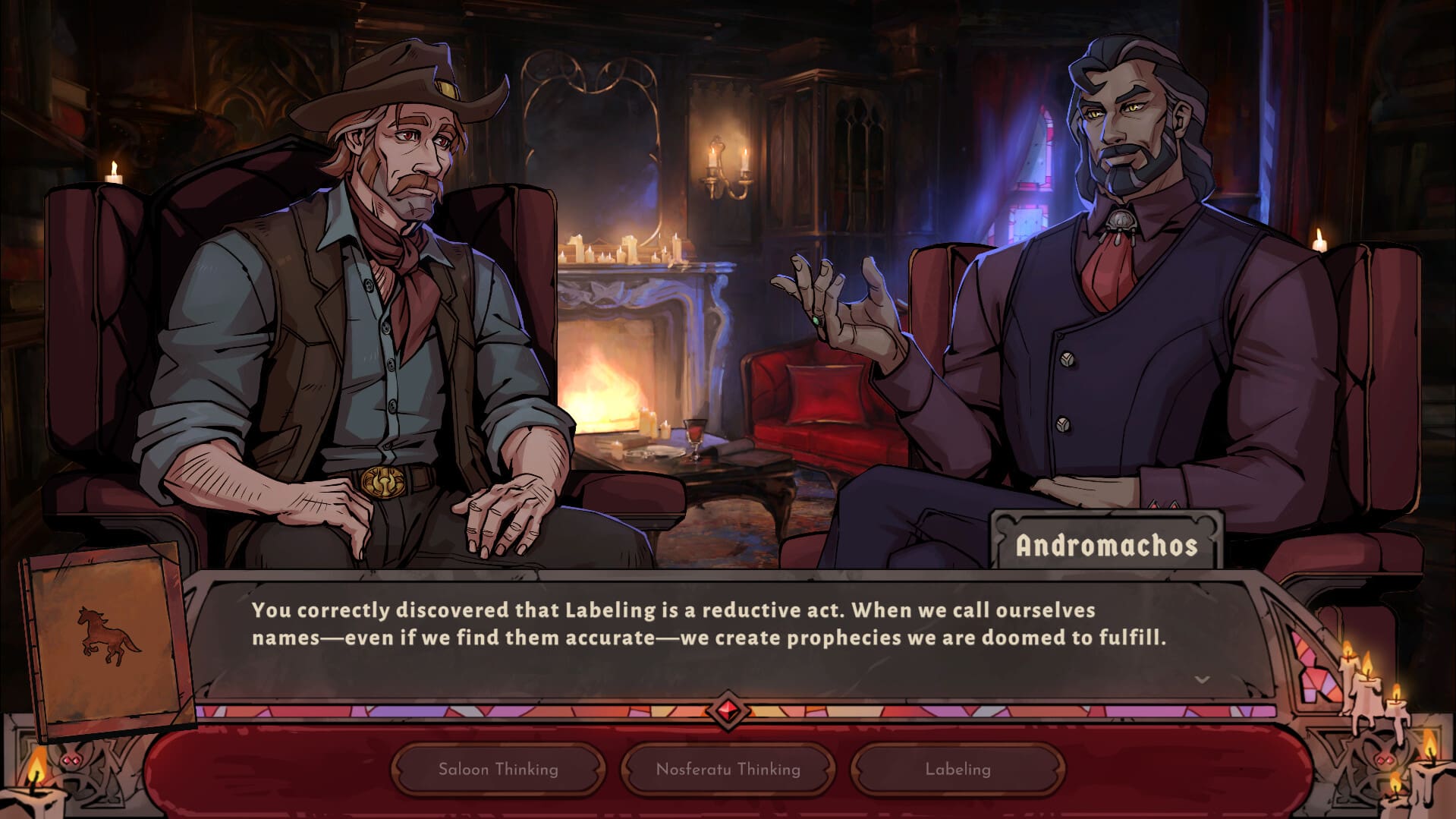
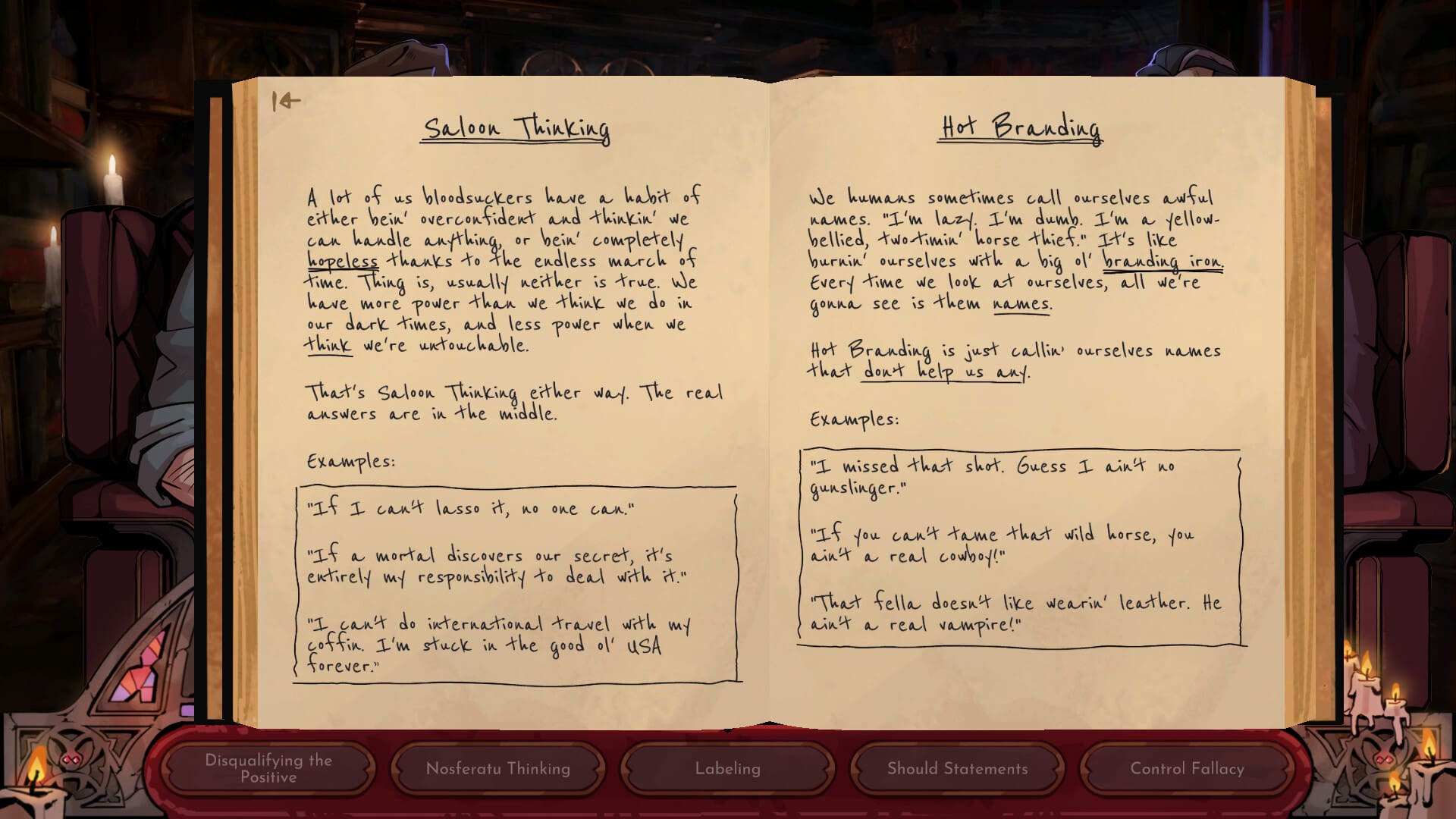
At its core, Vampire Therapist plays like a visual novel, but with a twist. Instead of just clicking through dialog, you’ve actively engaging with what characters are saying, picking apart their thoughts, and guiding them through their issues using real life behavioral therapy techniques.
It sounds heavy (and it sometimes is), however, the game does a surprisingly good job of balancing serious themes with humor. One minute you’re dealing with centuries-old trauma and the next there’s a bit of dry, self-aware comedy cutting through it. The balance keeps things from becoming overwhelming while giving the experience ample personality.
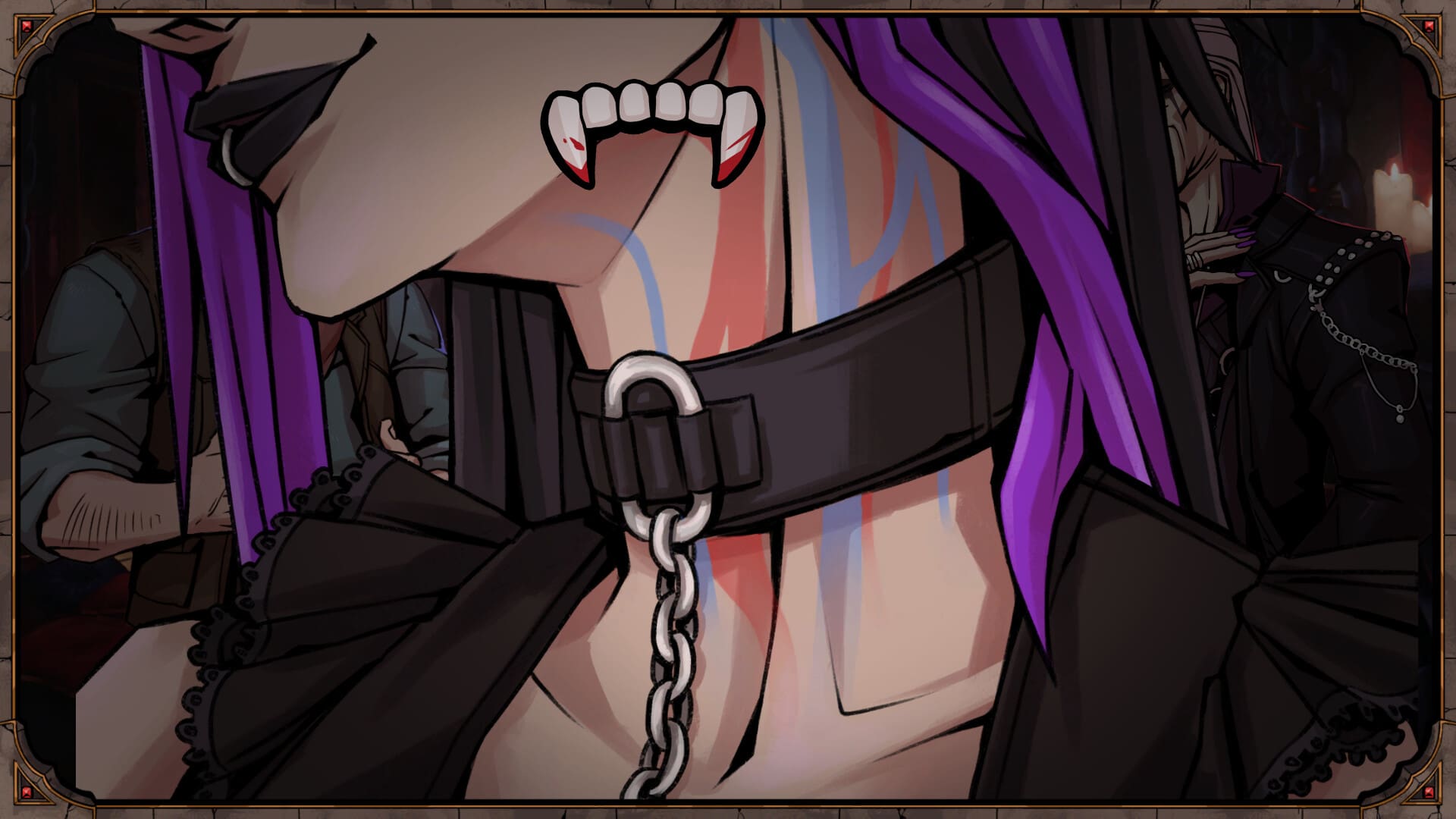
The writing is easily the standout. Characters feel distinct, and their stories are given enough time to breathe. You’re not just rushing through conversations; you’re encouraged to actually listen, think, and respond. It’s slower, sure, but it feels deliberate rather than drawn out.
Vampire Therapist is More Than Just a Gimmick
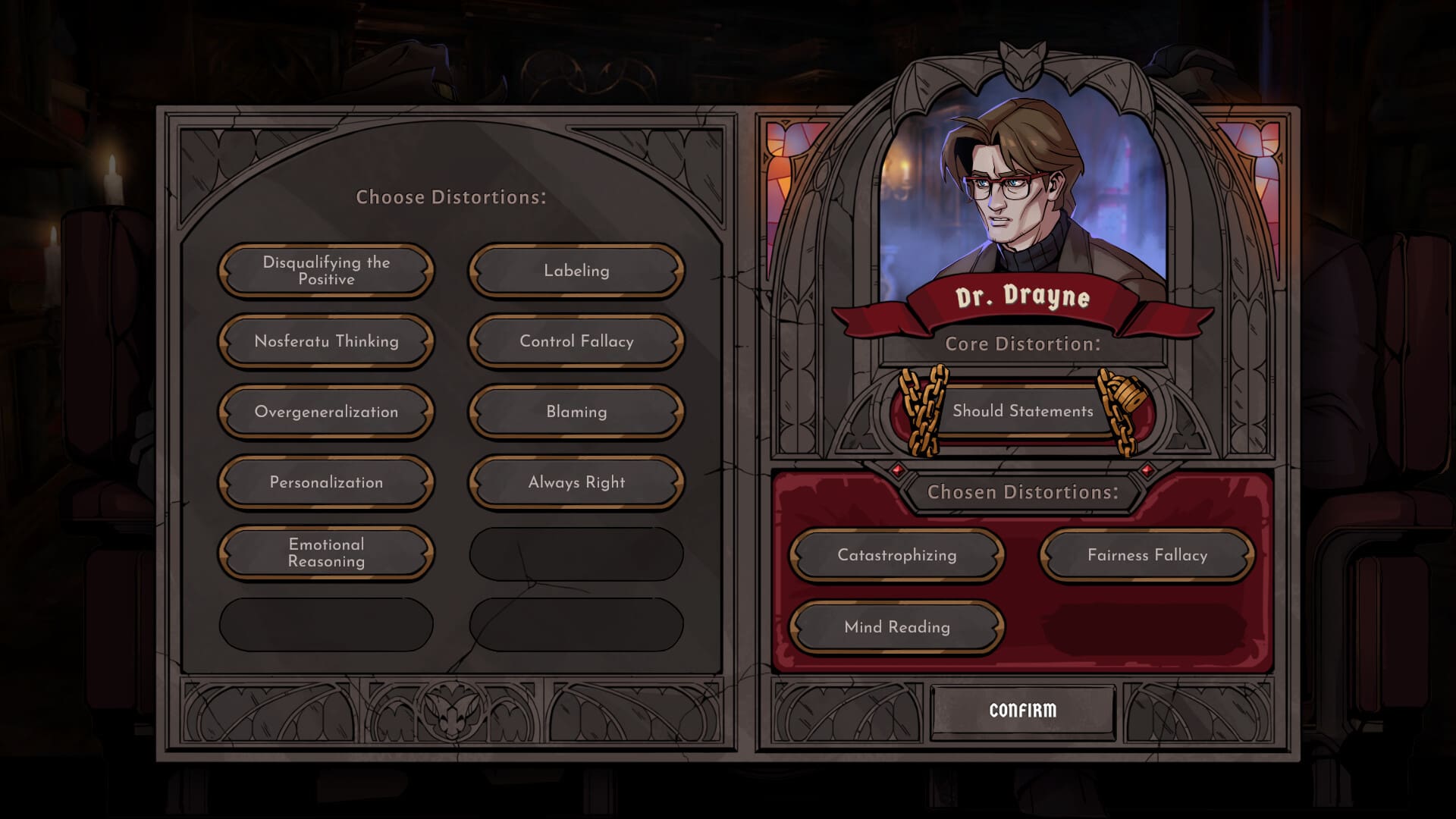
What really surprised me is how much effort has gone into making the therapy side feel authentic. You’re not just picking random dialog options, you’re identifying patterns in thinking, challenging them, and helping characters reframe their perspective. It adds a layer of depth that you don’t usually see in narrative-driven games.
Furthermore, the game doesn’t shy away from difficult topics. Instead it touches on things like trauma, addiction, and personality struggles, and while it never feels explorative, it can get heavy at times. That said, it handles these themes with a level of care that makes the experience feel meaningful rather than just “edgy”.
However, this approach won’t work for everyone. The pacing is slow, and if you’re looking for action or traditional gameplay systems, you won’t find much of that here. This is very much a sit-down, take your time kind of game.
Presentation and Atmosphere
Visually, Vampire Therapist leans into a stylized, almost gothic aesthetic. Character portraits are expressive, and there’s a strong sense of identity in how everything is presented. It’s not flashy, but it doesn’t need to be – the focus is clearly on the writing a performances.
And speaking of performances, the voice acting is genuinely impressive. It adds a lot to the experience,, helping sell both the humor and the heavier moments. When you’re spending this much time in conversations, that kind of quality makes a huge difference.
The setting itself (a therapy room above a goth club) gives the game a slightly surreal edge. It’s an unusual backdrop, but one that works, adding to the overall charm without feeling forced.
Summary
Vampire Therapist is a rare kind of game. It’s thoughtful, a bit weird, occasionally funny, and surprisingly impactful. It’s not trying to be fast-paced or action-packed – instead, it focuses on storytelling and reflection, and it does both very well.
It won’t be for everyone, especially if you prefer more traditional gameplay, but if you’re open to something different there’s a lot to appreciate here. The BAFTA nomination feels well-earned, and it’s easy to see why it’s resonated with so many players.
RATING
OUR SCORE - 6
6
SCORE
The lack of action isn't for everyone but if you enjoy lots of reading your games, what is here is done well.














Leave a Reply